Featured image credit: Isaac Cruz
If “all the world’s a stage”, as William Shakespeare so famously declared, then it could explain the traffic pile-ups that greet us every day across the city. But in one sleepy Los Angeles neighborhood, the more decked out the roadway, the better. At least where the historic Shakespeare Bridge is concerned. Driving through its Gothic spires, you’d be forgiven for expecting a gaggle of greasepaint-caked thespians to emerge, performing the likes of Hamlet or Macbeth as you coast across its brief but splendid stretch. It’s a gem in its Franklin Hills neighborhood, an area where the residents are well-acquainted with life’s finer things.
Wherefore Art Thou, Shakespeare Bridge?

Long decades before the lush garden beneath the Shakespeare Bridge was even a collection of seeds, the site was bisected by a gently meandering waterway known as the Sacatela Creek. The modest creek at one time cut across the city, joining with Ballona Creek near the coast. Yet, the Sacatela Creek didn’t inspire the Shakespeare Bridge. The trickling stream had already naturally diverted to a network of nearby storm drains by 1917, nearly a decade before the bridge was built.
So, why was a bridge needed at all? Because developers wanted people to move to Franklin Hills. And in order for that to happen, they’d need to provide quick, easy access to and from East Hollywood and the nearby Ivanhoe area closer to the LA River. All they needed to allow their Franklin Hills development to take off was a simple bridge. But we somehow ended up with what many have called the most romantic bridge in all of LA. Ummm, sorry, Sixth Street Bridge?
What’s in a Bridge?
To design a bridge worthy of the lavish Franklin Hills homes that would follow, developers sought the insight of J.C. Wright, a civil engineer working with the Los Angeles Bureau of Engineering. The year was 1926, and set design was hitting new heights of fancy. Perhaps that’s why Wright envisioned a Gothic structure plucked from the time-weathered pages of fairytales past.
Cost wasn’t really an issue, at least from where the developers stood. After all, they weren’t planning on sinking a penny of their own money into the bridge. Instead, they sought to have nearby residents foot the bill for its $60,000 cost (a little under $1.1 million by today’s standards). Eventually, the developers persuaded the city to put the residents on the hook for the full price, justifying it by claiming it would be a popular point of access when John Marshall High School opened a few years later. The controversy among residents that preceded the Shakespeare Bridge only goes to further emphasize just how much people adore it today.
“O, That I Were a Glove Upon That… Handrail”
To be fair, the Shakespeare Bridge is a rather stunning experience when you first see it. Amidst the Frankenstein quiltwork of the residential architecture, the stoic aedicules that bookend the bridge in two quartets still strike a jarring contrast. It almost looks like some forgotten film set that blew away from Studio City or a hiccup in time and space that deposited an Elizabethan English folly in the sun-faded hills of Los Feliz.
The bridge itself is a blink-and-you’ll-miss-it 261 feet long with one lane going each way for a width of around 30 feet. And that’s counting sidewalks on either side! Needless to say, large trucks aren’t advised to take the Shakespeare Bridge. Heading west on Franklin Avenue from Franklin Hills, the Shakespeare Bridge leads up to a brief crest that allows motorists a fleeting glimpse of Hollywood that looks absolutely wonderous under the dying light of the day. It further complements the fantasy instigated by the storybook architecture.
A Bridge by Any Other Name…

So, why is it called the Shakespeare Bridge? Why not the Dracula Bridge? Or the Quasimodo Bridge? Well, it’s worth noting that its official name is actually the Franklin Avenue Bridge. But as to why it’s called the Shakespeare Bridge, you can likely chalk it up to colloquial laziness. There’s no direct architectural significance; no thematic intention drawing a line between the structure and the literary works of the world-renowned English playwright and poet. Someone likely just saw the archaic spires, called it the “Shakespeare Bridge”, and it just stuck. The aedicules aren’t even accurately indicative of the architectural styles prevalent in Elizabethan England.
But, hey, we could all be calling it the Disney Bridge today with about as much logic behind it. It very nearly happened! For a brief moment shortly after its construction, locals took to calling the Shakespeare Bridge “the Disney Bridge” because of its fanciful design and its proximity to an early incarnation of the Walt Disney Studios on Hyperion Avenue. Then again, Walt Disney’s taxes likely went to funding the bridge, whereas Shakespeare’s most certainly did not. So, perhaps the Disney Bridge is more fitting?
“It Is Not in the Stars to Hold Our Destiny But In Ourselves”
On April 17, 1974, the Shakespeare Bridge received some valuable reinforcement. No, not structurally. Culturally. It was on this date that the beloved stretch of roadway became Los Angeles Historic-Cultural Monument # 126, legally preserving it for future generations to enjoy. The area beneath it has since been partially paved to accommodate the culmination of Monon Street. Otherwise, it’s beautified by a verdant garden fittingly dubbed the Shakespeare Bridge Garden. The Franklin Hills residents seem to prefer function over fashion with these names.
“‘Tis Not Enough to Help the Feeble Up…”

Yet structural support has been extended over the years, too. In the wake of the 1994 Northridge earthquake, city planners decided it would be in everyone’s best interests if the Shakespeare Bridge were given a bit of extra attention. This inspired a project that ultimately saw the bridge taken apart and put back together again, within the guidance of modern standards, of course.
However, this renovation also allowed a rare opportunity for historians to convene with engineers, returning the Shakespeare Bridge to a visual more closely representative of its original construction while meeting the standards of modern structural resilience.
Following the upgrades, the Shakespeare Bridge now features a continuous diaphragm of reinforced concrete that, in the event of an earthquake, transfers the seismic disruption to the abutment walls bordering the structure. This meant removing the expansion joints. Likewise, elements including sidewalks, railings, and the deck itself were reconstructed using reinforced concrete. With every painstaking detail considered, the project took four years, but when it was completed in 1998, most would agree it was worth every minute.
100 Years of the Shakespeare Bridge

In 2026, the Shakespeare Bridge will celebrate a full century of beautifying the already gorgeous scenery while helping Franklin Hills residents get around more easily. Not that the locals need much of an excuse to deck the aedicules. Whether waving rainbow Pride banners during Pride Month, Old Glory during Independence Day weekend, spindly grinning scarecrows among bales of hay in autumn, or glittering strings of tinsel at Christmastime, the bridge is often a focal point for community decorating efforts.
While the Shakespeare Bridge is adored around Los Feliz, it rarely exceeds the acclaim of a local landmark. However, every once in a while, legend takes the scenic route. For example, a persistent rumor alleges that the Shakespeare Bridge made an early silver (and emerald) screen debut with a brief appearance in 1939’s The Wizard of Oz. If so, they hid it well. Though the Shakespeare Bridge, like most of Los Angeles, has been preserved on film in the occasional film or television show, it’s not an exceedingly popular filming location. Perhaps it simply stands too much of a chance of stealing the scene.

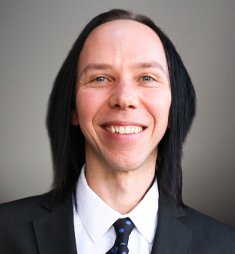
With a brand that says as much as JohnHart’s, Senior Copywriter Seth Styles never finds himself at a loss for words. Responsible for maintaining the voice of the company, he spends each day drafting marketing materials, blogs, bios, and agent resources that speak from the company’s collective mind and Hart… errr, heart.
Having spent over a decade in creative roles across a variety of industries, Seth brings with him vast experience in SEO practices, digital marketing, and all manner of professional writing with particular strength in blogging, content creation, and brand building. Gratitude, passion, and sincerity remain core tenets of his unwavering work ethic. The landscape of the industry changes daily, paralleling JohnHart’s efforts to {re}define real estate, but Seth works to maintain the company’s consistent message while offering both agents and clients a new echelon of service.
When not preserving the JohnHart essence in stirring copy, Seth puts his efforts into writing and illustrating an ongoing series entitled The Death of Romance. In addition, he adores spending quality time with his girlfriend and Romeo (his long-haired chihuahua mix), watching ‘70s and ‘80s horror movies, and reading (with a particular penchant for Victorian horror novels and authors Yukio Mishima and Bret Easton Ellis). He also occasionally records music as the vocalist and songwriter for his glam rock band, Peppermint Pumpkin.